How to Fix a Door That Won't Close Properly
A door that drags, sticks, or refuses to latch has 5 common causes. Diagnose yours and fix it in 15–30 minutes without removing the door.

A door that won’t close properly is a daily annoyance — it bangs, it doesn’t latch, it leaves a gap that lets in cold air. The cause is almost always one of five things, and all of them are fixable in under 30 minutes without removing the door. This guide walks through how to fix a door that won’t close properly, starting with the easiest causes and ending with the trickier ones.
What You’ll Need
- A Phillips screwdriver (#2 works for most door screws)
- A flathead screwdriver
- A hammer
- A chisel (1-inch or wider)
- Wooden golf tees or matchsticks
- Wood glue
- A pencil
- 100-grit sandpaper (or a hand plane for serious dragging)
- Optional: longer 3-inch screws if the door has sagged
Step 1: Diagnose the Problem
Open the door fully and slowly push it closed while watching. Where does it stop closing properly?
- Hits the frame on the latch side (opposite the hinges): The door is dragging on the frame.
- Doesn’t reach the strike plate: Latch isn’t engaging — hinges or strike plate misaligned.
- Closes but pops back open: Strike plate or latch is in the wrong spot.
- Closes but doesn’t catch: Latch isn’t aligning with the hole in the strike plate.
- Drags on the floor: Sagging hinges or new flooring underneath.
Identify yours, then jump to the matching section below.
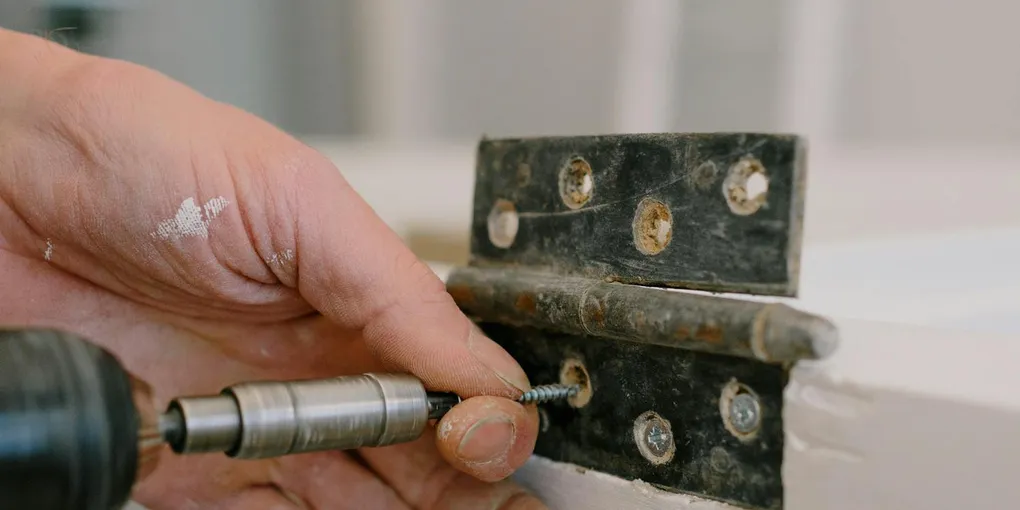
Cause 1: Loose Hinge Screws (The Most Common Issue)
Heavy doors sag over time as the hinge screws work loose in the wood. A sagging door drags on the floor or rubs the frame.
Fix:
- Open the door and inspect each hinge. Wiggle the door at the latch side — if you can move it without the hinges flexing, the screws are loose.
- Tighten all six screws on each hinge. Top hinge first (it bears the most weight).
- If a screw spins endlessly (stripped hole):
- Remove the screw.
- Pack the hole with several wooden golf tees or matchsticks dipped in wood glue. Break them off flush.
- Let dry 30 minutes.
- Drive the screw back in. It’ll grip like new.
- For heavily sagged doors: replace one screw per hinge with a 3-inch screw that reaches the wall framing behind the door jamb. This pulls the door back into alignment.
That last trick (3-inch screw) is the secret weapon most homeowners don’t know. It corrects sag without removing the door.
Cause 2: Door Dragging on the Frame
The door rubs against the frame on the latch side. Usually caused by a slight shift in the house, swollen wood from humidity, or a heavy paint buildup.
Find the drag point:
- Close a piece of paper in the door at different heights — top, middle, bottom.
- The paper will pull free where there’s a gap and tear where the door is rubbing.
Fix:
For a small drag (a millimeter or two):
- Mark the high spot with a pencil.
- Lightly sand it down with 100-grit sandpaper, with the door closed if you can.
- Test the door. Repeat as needed.
For a larger drag:
- Take the door off (remove the hinge pins, ask someone to support it).
- Lay it flat or hold it edge-up.
- Use a hand plane or sanding block to remove material from the offending edge.
- Stop frequently to check fit.
- Touch up the bare wood with stain or paint.
If the drag is at the top, you may instead be able to shim the bottom hinge (slip a thin cardboard shim behind the hinge leaf when reinstalling), which tilts the door away from the rub.
Cause 3: Strike Plate Misalignment
The latch doesn’t line up with the hole in the strike plate. The door closes but won’t catch, or pops back open.
Diagnose:
- Apply a small amount of lipstick or pencil graphite to the latch.
- Close the door gently against the strike plate (don’t latch it).
- Open and look at the mark on the strike plate. Did the latch hit above, below, or beside the hole?
Fix small misalignments:
- File the strike plate hole. Use a small metal file to widen the hole in the direction the latch is missing. Don’t remove too much — small adjustments only.
- Test by closing the door.
Fix larger misalignments:
- Unscrew the strike plate.
- Move it up, down, or sideways as needed.
- Trace the new outline with a pencil.
- Use a chisel to enlarge the mortise (the recessed area) so the strike plate sits flush.
- Fill the old screw holes with wood filler or golf tees + glue (see Cause 1).
- Screw the strike plate back in the new position.
Cause 4: Hinge Mortises Too Deep or Too Shallow
If a hinge sits too deep in the door, the door binds against the frame. Too shallow, the door springs back open.
Fix for too-deep mortise (door binds):
- Remove the hinge.
- Cut a piece of thin cardboard or shim material the size of the hinge leaf.
- Place the shim in the mortise, then reattach the hinge over it.
- Test the door.
Fix for too-shallow mortise (door springs open):
- Remove the hinge.
- Use a chisel to deepen the mortise slightly. Go 1/32” at a time and test.
- Reattach the hinge.
This is rare on a door that worked at one point — but common on doors that were rehung or where new hinges were installed.
Cause 5: Door Dragging on Floor (After New Flooring)
If you installed new flooring (especially carpet, thick tile, or laminate over a previous thin floor), the door now drags.
Fix:
- Measure how much the door drags (1/4 inch? 1/2 inch?).
- Mark a cut line on the bottom of the door, measured from the top of the door to that distance shorter than now.
- Remove the door (lift the hinge pins).
- Score the cut line with a utility knife to prevent splintering.
- Cut with a circular saw guided by a straightedge, or hand-cut with a fine-tooth saw.
- Sand the bottom edge smooth.
- Rehang the door.
For laminate flooring, you may instead be able to plane just the bottom without fully cutting — saves the door’s finished look.
Common Mistakes to Avoid
Cranking on stripped screws. Spinning a stripped screw for 5 more minutes will not make it tighten. Replace it with a longer screw or pack the hole with glue and tees.
Filing too much on the strike plate hole. A latch needs to seat with a solid click. A hugely oversized strike plate hole means the door doesn’t latch reliably.
Planing too much off the door at once. A door that’s 1/8 inch too wide can be sanded down. A door that’s 1/4 inch too narrow can’t be undone. Take material off slowly.
Forgetting to support the door when removing pins. When the second hinge pin comes out, the door drops. Have a helper or wedge.
Frequently Asked Questions
Why does my door close fine in summer but not in winter? Wood expands and contracts with humidity. A door that fits properly year-round needs about 1/16-inch gap on each side. If your door is too tight in winter (high humidity in the house) or summer (depending on climate), sand the binding side enough to leave room.
The whole door is crooked — what now? That’s hinge sag. Use the 3-inch screw trick on the top hinge. It often pulls the door back into square in one move.
Why won’t my new replacement door close like the old one? New doors are slightly oversized so you can custom-fit them. If your new door binds, the gap is too tight — sand or plane it down to match the frame.
The latch is broken — does that count as “won’t close”? A broken latch needs replacement (about $15 for a basic doorknob with latch). The latch mechanism is replaceable separately if the knob is fine — about $5 — but requires fitting.
Should I just replace the whole door? Almost never. A door that won’t close is almost always a 30-minute fix. Replacement is a 3–4 hour job and $100–500 for the door alone.
A Door That Closes the First Time
A door that closes properly is one of those small things you don’t appreciate until it’s wrong. The five fixes above handle 95% of cases without removing the door, without buying anything more than a few screws or a golf tee. Identify the cause, do the right fix, and you’ll close the door for years without thinking about it.